
 Grade: CG-172
Vinyl tris(2-methoxyethoxy) silane
CG-172 (Vinyl tris(2-methoxyethoxy) silane) is a typical vinyl silane that can undergo double bond addition reactions in the presence of peroxides or radical initiators. The alkoxy groups can hydrolyze to form silanol structures, which are prone to self-condensation reactions, and the silanol structures can bond with hydroxyl groups on the substrate surface. It has lower reactivity than CG-151, and compared to CG-151/171 which produces ethanol/methanol, ethylene glycol monomethyl ether has a boiling point of up to 124°C, effectively reducing VOC generation and lowering porosity in certain applications.
- CAS No.: 1067-53-4
- EC No.: 213-934-0
- Molecular Formula: C11H24O6Si
- Structural Formula
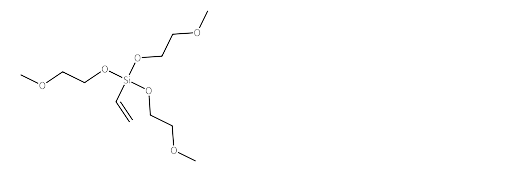
- Synonyms: Tris(2-methoxyethoxy)vinylsilane
- Appearance: colorless, transparent liquid
- Purity: ≥98%
- Density (20 °C): 1.030-1.050 g/cm3
- Boiling point: 285 °C
- Solubility: soluble in organic solvents,hydrolyzes in water,low reaction rate。
- Flash point: 92 °C
Packaging and Storage
This product can be packaged in 25 kg plastic drums, 200 kg plastic drums, or steel drums. Other package sizes are available upon request. Store in a cool, well-ventilated, dry place in tightly sealed containers, protected from light. Keep away from moisture and sources of ignition. Ensure the lid is tightly sealed and effectively isolates the product from air; moisture in the air can react quickly, thereby leading to hydrolysis and polymerization. Shelf life in the original unopened packaging is one year. This product is irritating to skin and eyes. If it contacts skin, wash with soap. If it contacts eyes, rinse immediately with plenty of water.
Application
CG-172 is commonly used in low-smoke halogen-free cable compounds, effectively improving the limiting oxygen index and enhancing flame retardancy of cable compound products while maintaining conventional coupling agent functions. CG-172 can be used to pretreat clay, silica-containing inorganic fillers, and magnesium hydroxide flame retardant fillers. CG-172 can improve electrical properties and mechanical strength of EPDM, cross-linked polyethylene, and other polymers or resins filled with inorganic fillers.
CG-172 can bond with inorganic fillers and organic polymer powders that react with vinyl groups, hydrophobizing the filler surface, especially showing better performance advantages in the modification of flame retardant powders.
CG-172 can improve the bonding strength between fiber monofilaments and resin, and the performance of composites in wet conditions.
CG-172 can provide crosslinking points for organic polymers, used as a modifier for polymer materials, modifier for EPDM, and as a crosslinking agent for silane-crosslinked cable compounds.
CG-172 is a coupling agent for filled rubber compounds, and can also improve the tack and durability of emulsions or coatings.