
 Grade: CG-5701
(trimethoxysilyl)methyl prop-2-enoate; acryloxypropyltrimethoxysilane
CG-5701 ((trimethoxysilyl)methyl prop-2-enoate; acryloxypropyltrimethoxysilane) is primarily used to improve the dry and wet strength of unsaturated polyester resin composites and offers good light transmission properties. It is also suitable for polyurethane, polybutene, polypropylene, polyethylene, and EPDM. Treating glass fiber with this coupling agent enhances the wet mechanical strength and electrical performance of glass fiber-reinforced composites.
- CAS No.: 21134-38-3
- EC No.: N.A.
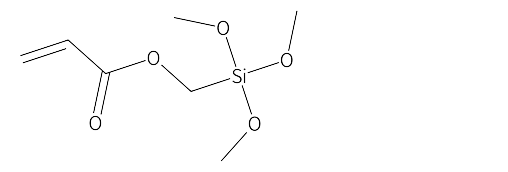
- Molecular Formula: C7H14O5Si
- Structural Formula
- Appearance: colorless, transparent liquid
- Purity: ≥98%
- Density (20 °C): 1.040-1.060 g/cm3
Packaging and Storage
This product can be packaged in 25 kg plastic drums, 200 kg plastic drums, or steel drums. Other package sizes are available upon request. Store in a cool, well-ventilated, dry place in tightly sealed containers, protected from light. Keep away from moisture and sources of ignition. Ensure the lid is tightly sealed and effectively isolates the product from air; moisture in the air can react quickly, thereby leading to hydrolysis and polymerization. Shelf life in the original unopened packaging is one year. This product is irritating to skin and eyes. If it contacts skin, wash with soap. If it contacts eyes, rinse immediately with plenty of water.
Application
CG-5701 is primarily used to improve the dry and wet strength of unsaturated polyester resin composites and offers good light transmission properties. It is also suitable for polyurethane, polybutene, polypropylene, polyethylene, and EPDM. Treating glass fiber with this coupling agent enhances the wet mechanical strength and electrical performance of glass fiber-reinforced composites. In the wire and cable industry, treating clay-filled peroxide crosslinking EPDM systems with this coupling agent improves the dissipation factor and specific inductive capacitance. It is used to improve the bonding strength to inorganic materials such as silica, talc, clay, mica, and kaolin, increasing water resistance and lowering curing temperature. It can also be copolymerized with vinyl acetate and acrylic or methacrylic acid monomers; these polymers are widely used in materials, sealants, and sealants to provide beneficial adhesion and durability. With UV curing properties, it can be used as an adhesion promoter for UV-curable coatings and is suitable for free-radical curing systems.