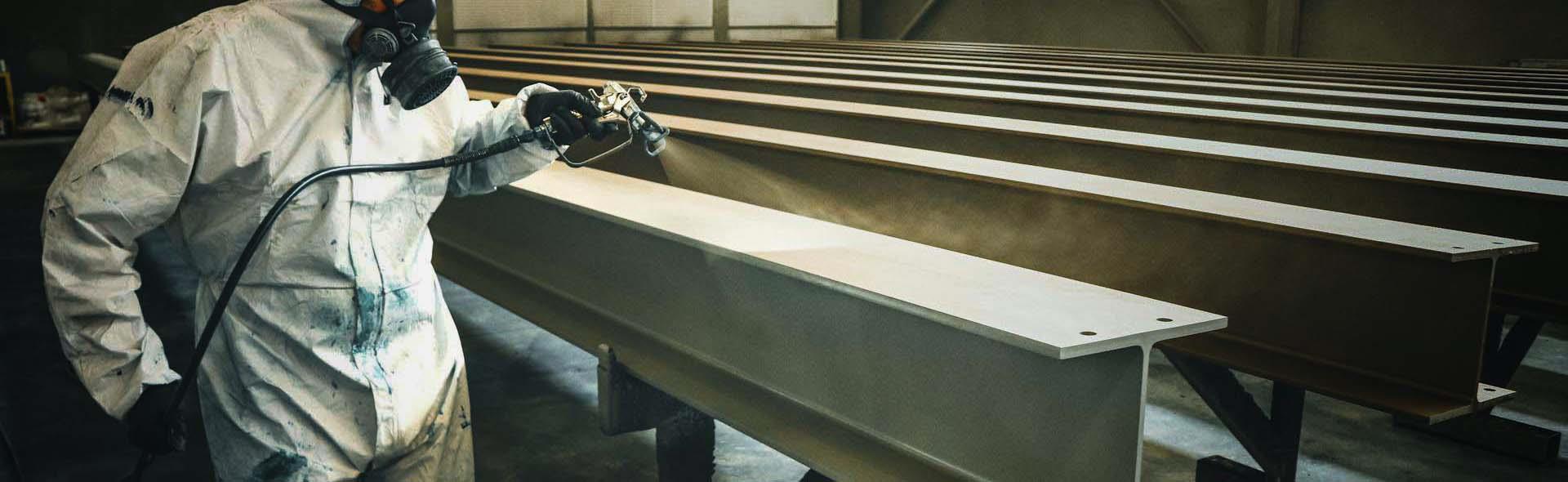
Anticorrosive Coatings (industrial, marine)
Application Areas
-
Zinc-rich primer
For bridge, pipeline, and steel structure protection, ensuring good bonding between zinc powder and the substrate is essential. Silane coupling agents form a robust interface between the organic phase and inorganic zinc powder, enhancing electrochemical protection efficiency.
-
Container Coating
Silane additives can enhance the corrosion resistance, impact resistance, and service life of coatings, ensuring durability in frequent transportation and outdoor exposure environments.
-
Marine and Offshore Corrosion Protection
For hulls, docks, and offshore facilities, resistance to salt spray, humidity, and biological erosion is required. Silane coupling agents enhance the bonding between coatings and substrates, improving salt spray resistance and long-term weather durability.
-
Industrial Anticorrosion
Suitable for steel structures, storage tanks, chemical equipment, etc., the coating requires excellent chemical resistance and moisture-heat resistance. Silane can improve the interfacial bonding between inorganic fillers and resins, enhancing coating density and adhesion.
Main Performance Improvements
-
Mechanical Performance Optimization
Enhance the flexibility, impact resistance, and wear resistance of the coating to ensure structural integrity under complex operating conditions.
-
Filler Dispersion
Silane improves the dispersion of inorganic fillers (such as zinc powder, silica, and titanium dioxide), ensuring formula stability and uniform coating performance.
-
Weather Resistance and Waterproof Performance
Alkyl/fluorinated silanes can reduce surface energy, enhancing the water resistance and weather stability of coatings for long-term outdoor use.
-
Corrosion Resistance Enhancement
Silane reduces interfacial defects and micropores, enhancing coating density and shielding performance while delaying the penetration of corrosive media.
-
Adhesion Enhancement
Silane molecules contain reactive functional groups that form chemical bridges between metal/inorganic fillers and organic resins, enhancing interfacial adhesion.